Sometimes writing students want me to assess their talent and the chances of their success. If at all possible, I will steer the topic away from this, but if they ask me point blank, I'll say, "I really can't say." Which annoys people. But here's why I can't say: I have no idea what this writer will do next to develop as a writer, how tenacious they are, and how their writing will develop after hours, days, yearsspent at the keyboard.
But still I understand--really understand--their desire for the assessment. I remember wanting that myself. I wanted a writing elder to say, Go forth writing cub! You are TALENTED. (It's a little embarrassing to admit that but I also realize that it's normal for newer writers to want this stamp of approval). But, the problem is this desire for validation privileges talent above all else and assumes that talent is an objective quality that established writers (whatever their aesthetic) will be able to accurately assess.
I remember when I was in a graduate workshop with David Shields, he looked around the room (there were 9 of us) and said, "It's impossible for me to know which of you will succeed as writers. You are all talented, but I don't know which of you are willing to stick with it long enough to get published." At the time, I was still buying into the school of Talent Rules and doubted if what he said was true. There was one writer in the class who I was sure would be in the pages of Harper's, The New Yorker, and The Atlantic Monthly within a few years. But, as it turned out, she cut her writing losses and left the program to pursue a career in law. Maybe she'll come back to writing. I hope so. I liked her voice.
But all that being said, we all need encouragement, and a little encouragement can go a long way. My first college writing teacher, Penny Connell (Penny, are you out there?), pretty much looked me in the eye and said, "You got it, kid." I was only 18 and if someone as smart as her said I got it, I must "have it." I remember she'd written encouraging comments all over my first essay and the comments dropped right down into the center of me. I wanted more of this feeling. I wanted to capture readers like her.
15 years later I found that essay when I was going through some old papers. Wow! I thought as I began to read, excited to see those little germs of talent that Penny had called out. Well, let me tell you it was the most ordinary of freshman essays. I've taught freshman comp, and believe me, there was nothing in this essay that really jumped off the page. What had she seen? I don't know. But I do know that it was her encouragement that made me want to write more. And, really, that's the most we can hope for from our writing teachers.
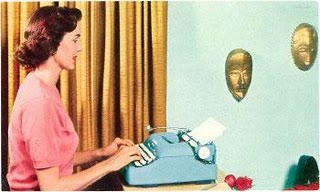
Writing is My Drink
Monday, July 12, 2010


Friday, July 9, 2010
Writing for love and for money
Working with newer writers as a teacher and coach, I am reminded of my foggy intentions as I first stumbled towards writing. Did I want to be a journalist? a poet? a fiction writer? I didn't know. Was I writing for money? self-expression? love? fame? recognition from my peers? Yes, all of these. So, every piece of writing I did was unfairly asked to meet competing needs. Like a journalist, I wanted to make some money from my writing. Like a poet or a fiction writer, I wanted to express something previously unexpressed about life, preferable I'd bring the ineffable to the page in some startling new way that would bring me the awe of writers I admired. And through all of this confusion about why I was writing each piece, I hadn't even yet found the vehicles my voice was suited for--personal essays and memoir.
In the past year, I've become acutely aware of my competing needs as a writer. I want to make money (there I said it). I want to express what has not been expressed. I want to write work that expands hearts and minds. I want peers to "get" and--I admit it--admire my work. But, I realize that if I'm making a living as a writer and writing teacher (which I am! a dream come true!), every writing task will be addressing at least one of my goals, but no writing task will address all of them. I write articles for money for match.com. I don't expect them to be poetry or to win awards for them. I'm writing another book--it's a ton of work and who knows what the money will be--but it's my book and I get to say exactly what I want in it, just the way I want to say it. Delicious.
When you approach a writing task, ask yourself: What am I hoping to get from this? The love of my mother? a big check? small check? a publication credit? a chance to create a literary vision? the thrill of a byline? a bigger audience? All of these goals are legitimate, but no writing task--don't matter how great a writer you are--can meet every goal. It's okay to write for money and it's okay to write for love. It's very rare to write for both at the same time. And, it's a ton easier to find the words if you know why you're looking for them.
In the past year, I've become acutely aware of my competing needs as a writer. I want to make money (there I said it). I want to express what has not been expressed. I want to write work that expands hearts and minds. I want peers to "get" and--I admit it--admire my work. But, I realize that if I'm making a living as a writer and writing teacher (which I am! a dream come true!), every writing task will be addressing at least one of my goals, but no writing task will address all of them. I write articles for money for match.com. I don't expect them to be poetry or to win awards for them. I'm writing another book--it's a ton of work and who knows what the money will be--but it's my book and I get to say exactly what I want in it, just the way I want to say it. Delicious.
When you approach a writing task, ask yourself: What am I hoping to get from this? The love of my mother? a big check? small check? a publication credit? a chance to create a literary vision? the thrill of a byline? a bigger audience? All of these goals are legitimate, but no writing task--don't matter how great a writer you are--can meet every goal. It's okay to write for money and it's okay to write for love. It's very rare to write for both at the same time. And, it's a ton easier to find the words if you know why you're looking for them.
Thursday, July 8, 2010
It started like this
I read or heard recently that most writers have distinct memories of writing "books" in childhood. I remember one I wrote one about a rabbit named Felix bound with an ant trail of staples up the spine. So satisfying! But, the urge to write went underground during adolescence. It might have had everything to do with the desultory manner in which language arts was taught in British schoolmarm-dominated Canada, and that we never read anything that met my reader cravings. No women writers, no first person, no writers of color. More than anything I longed for first person. While The Catcher in the Rye was okay, pretty good--the narrator was removed from me by a generation and a gender. I wanted writing that felt like it was happening now, writing that broke the secret code of life. Some of my best reading moments were in the sixth grade when underground copies of The Happy Hooker and Go Ask Alice made it into my hands. Above ground, Are You There God? It's Me, Margaret slaked my thirst temporarily.
My first writer falling in love happened with a movie not a book. I went with my high school boyfriend to Annie Hall. I came out of the theater a changed person. I was near panting trying to express to my confused boyfriend, a future engineer who thought the movie was "okay," what was happening. I was intoxicated by the first person narration, the way Woody mused to the camera about relationships, the split screens, the subtitles, the scene when Max, Woody and Annie time travel to visit Woody's childhood on Coney Island, the character of Annie (a quirky, non-babe woman as love interest!), the literary references, but most of all, some internal divining rod in me sensed this story was from his own life. Before I knew the word memoir, before I read Fear of Flying or Notes from a Native Son, before I ever knew who Joan Didion or Sylvia Plath was, I had Woody.
But I couldn't quite figure out how to apply this urgency to create something like Annie Hall. A few hours out of the movie, I sensed that Woody and I were not on an equal playing field. I couldn't express it then, but I intuited that being male and Jewish and a New Yorker was a distinct literary advantage. I was a sixteen year old girl living in a Canadian suburb where locking your front door was optional. My Coney Island was Protestants drinking gin and tonics in the living room after 18 holes. What possibly could be of interest?
My first writer falling in love happened with a movie not a book. I went with my high school boyfriend to Annie Hall. I came out of the theater a changed person. I was near panting trying to express to my confused boyfriend, a future engineer who thought the movie was "okay," what was happening. I was intoxicated by the first person narration, the way Woody mused to the camera about relationships, the split screens, the subtitles, the scene when Max, Woody and Annie time travel to visit Woody's childhood on Coney Island, the character of Annie (a quirky, non-babe woman as love interest!), the literary references, but most of all, some internal divining rod in me sensed this story was from his own life. Before I knew the word memoir, before I read Fear of Flying or Notes from a Native Son, before I ever knew who Joan Didion or Sylvia Plath was, I had Woody.
But I couldn't quite figure out how to apply this urgency to create something like Annie Hall. A few hours out of the movie, I sensed that Woody and I were not on an equal playing field. I couldn't express it then, but I intuited that being male and Jewish and a New Yorker was a distinct literary advantage. I was a sixteen year old girl living in a Canadian suburb where locking your front door was optional. My Coney Island was Protestants drinking gin and tonics in the living room after 18 holes. What possibly could be of interest?
Wednesday, July 7, 2010
X is My Drink
Sometimes in Al-Anon someone will say something like, "X is my drink." X might be "worry" or "obsessive thinking." Most of us in Al-Anon have lived with an alcoholic--most likely grew up with one or fell in love with one, very often both. So while we might not be compulsively drinking ourselves, many of us have something we feel like we can't stop doing. Maybe we can't stop worrying about what might happen to the alcoholic or to ourselves. Or about whether we left the stove on or the garage door open. Fun stuff.
So that's where the title of this blog comes from. Writing is my drink. Writing is my "go to" thing, the think I can't stop doing, and it's not unrelated to the drinking I grew up with. Like many kids who grew up in the blue cloud of the early '60s, I felt like I had to be "good." And often good meant not talking about what was really happening--the argument that erupted downstairs after you were supposed to be asleep, the inviolability of the 5pm Happy Hour. And if you don't talk or think about the stuff that's real for long enough, you'll probably find you actually have no idea what you think. At least, that's what happened to me.
Writing has been part of my recovery from being good, silent, and in denial. All of those are so much a part of who I am that I keep coming back to the page to remind myself that I have a point of view, at take on the world. Not the take. A take. Mine.
Writing is also my drink because it's my high. Sometimes, that's great. I got so excited about starting this blog yesterday that my thoughts were consumed with what would I write next, how I would say it. Even trying to fall asleep, my mind will pull up a sentence, parse through it, searching for how it might be better, how it might be tweaked just a little, and then finally become the perfect articulation of an experience. Finally, I will have reached that place of expression, free at last from the isolation of unnamed life.
So that's where the title of this blog comes from. Writing is my drink. Writing is my "go to" thing, the think I can't stop doing, and it's not unrelated to the drinking I grew up with. Like many kids who grew up in the blue cloud of the early '60s, I felt like I had to be "good." And often good meant not talking about what was really happening--the argument that erupted downstairs after you were supposed to be asleep, the inviolability of the 5pm Happy Hour. And if you don't talk or think about the stuff that's real for long enough, you'll probably find you actually have no idea what you think. At least, that's what happened to me.
Writing has been part of my recovery from being good, silent, and in denial. All of those are so much a part of who I am that I keep coming back to the page to remind myself that I have a point of view, at take on the world. Not the take. A take. Mine.
Writing is also my drink because it's my high. Sometimes, that's great. I got so excited about starting this blog yesterday that my thoughts were consumed with what would I write next, how I would say it. Even trying to fall asleep, my mind will pull up a sentence, parse through it, searching for how it might be better, how it might be tweaked just a little, and then finally become the perfect articulation of an experience. Finally, I will have reached that place of expression, free at last from the isolation of unnamed life.
Tuesday, July 6, 2010
Step One: We admitted we were powerless over the printed word.
I was born to drink. I'm the daughter of Betty and Don Draper from Mad Men, and I swear I came out of the delivery room with Frank Sinatra crooning, "It's no good unless you love them allllllllll the way," a gin gimlet in my bottle, and a pack of Pall Malls tucked into my baby blanket.
I couldn't wait to grow up and be like my mom--hosting cocktail parties, clicking about in slingbacks with matching sheath dresses, and nuzzling handsome men in dark bars with the flashing martini glass above the door. When one of those guys caught me taking a hit off the lipsticked butt of a Salem Menthol at age 7, I didn't skip a beat before I answered the whatcha-doing question with a sweet-voiced, "Just pretending to be my mom."
But things didn't work out for drinking and me. Yes, I had my wild times in my early twenties, but I didn't have the staying power; I couldn't sustain a drinking life. The gift for real drinking had passed me by in the great genetic shuffle. And by 25, I had my nose stuck in a book. I wanted the literary life, the way my mom wanted the Rat Pack one. These days I can fall asleep after just a half a glass of Shiraz, but the right words can keep me up into the party hours of the night.
This blog is about my wild writing life, my desire to find myself on the printed page and to finally make sense of the thirst that runs through my family.
I couldn't wait to grow up and be like my mom--hosting cocktail parties, clicking about in slingbacks with matching sheath dresses, and nuzzling handsome men in dark bars with the flashing martini glass above the door. When one of those guys caught me taking a hit off the lipsticked butt of a Salem Menthol at age 7, I didn't skip a beat before I answered the whatcha-doing question with a sweet-voiced, "Just pretending to be my mom."
But things didn't work out for drinking and me. Yes, I had my wild times in my early twenties, but I didn't have the staying power; I couldn't sustain a drinking life. The gift for real drinking had passed me by in the great genetic shuffle. And by 25, I had my nose stuck in a book. I wanted the literary life, the way my mom wanted the Rat Pack one. These days I can fall asleep after just a half a glass of Shiraz, but the right words can keep me up into the party hours of the night.
This blog is about my wild writing life, my desire to find myself on the printed page and to finally make sense of the thirst that runs through my family.
Subscribe to:
Posts (Atom)